Basket
Clean basketTotal:
In the early days of RF control technology, full-band signal jammers were large, heavy, and unmistakably industrial. Designed primarily for fixed installations, these systems prioritized raw output power over portability. Today, however, the landscape has changed dramatically.
Modern Full-band Signal Jammer are increasingly compact, portable, and discreet — without sacrificing operational stability. This shift reflects broader advances in electronics, thermal design, antenna engineering, and power management.
So how does miniaturization actually happen?
One of the biggest technological shifts is the integration of multiple frequency modules into highly compact circuit architectures.
Instead of relying on separate amplification blocks for each band, contemporary designs use optimized RF layouts that consolidate:
Multi-band amplification structures
Shared filtering frameworks
Integrated shielding layers
This reduces internal space requirements while maintaining multi-frequency coverage.
Miniaturization is no longer about shrinking components alone — it’s about redesigning architecture.
Historically, cooling systems were the main reason GPS Jammer for anti tracking remained large. High output levels generate heat, and large heat sinks or external fans were unavoidable.
Modern systems adopt:
Optimized airflow channels
Heat-dissipating aluminum alloy shells
Intelligent power balancing
Temperature-aware modulation
By distributing thermal load efficiently, manufacturers reduce the need for oversized cooling structures, enabling slimmer designs.
Full-band does not mean maximum output on every frequency simultaneously.
Advanced Anti Recording Jammer systems now incorporate dynamic power allocation strategies. Instead of broadcasting uniformly across all bands at peak levels, output is balanced according to operational demands.
This allows:
Reduced battery strain
Smaller internal power units
Longer runtime in portable formats
Power efficiency directly contributes to physical downsizing.
Antenna engineering plays a crucial role in concealment.
Traditional long external antennas are gradually replaced by:
Compact multi-band antenna arrays
Directional configurations
Internalized antenna structures
These designs support discreet deployment in professional environments where visibility must be minimized.
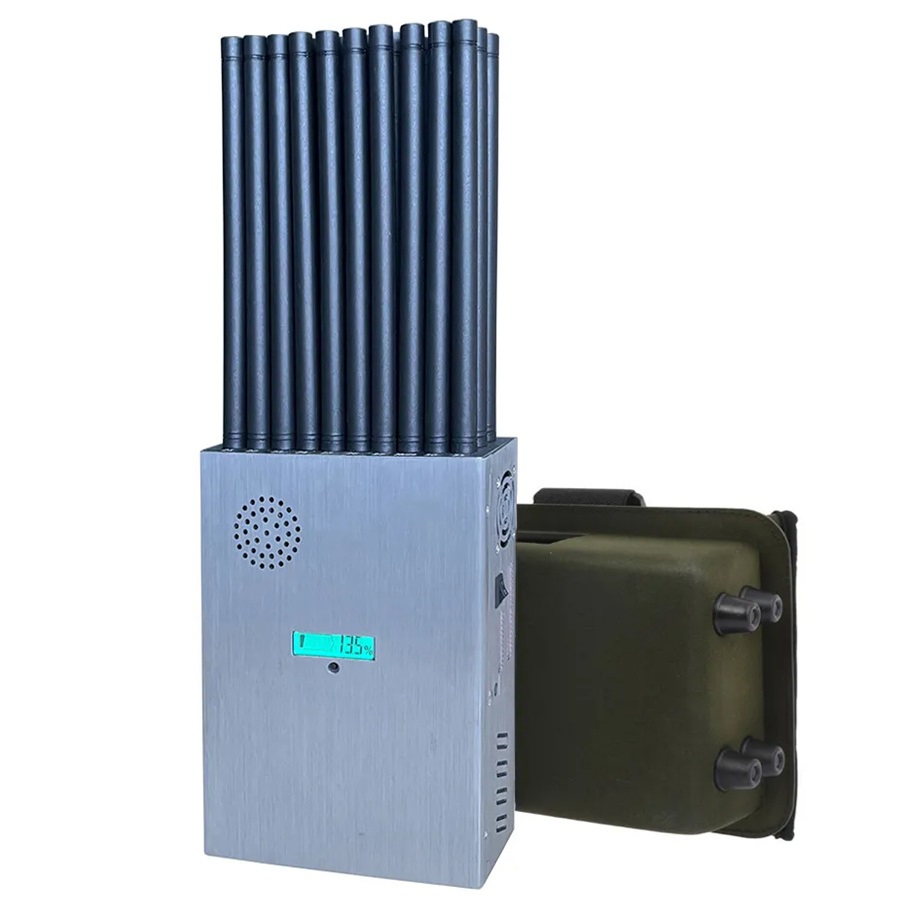
Modern enclosure materials provide both electromagnetic shielding and structural durability without adding excessive weight.
Common design trends include:
Lightweight alloy housings
Compact modular frames
Integrated battery compartments
The result is a device that appears closer to a professional electronics unit rather than bulky tactical equipment.
In many professional contexts, visibility itself can be disruptive. Therefore, concealment is not purely aesthetic — it serves operational discretion.
Smaller full-band WiFi Bluetooth Blocker are now designed for:
Portable case integration
Desk-level deployment
Temporary controlled environments
Mobile professional teams
The emphasis is on controlled presence rather than conspicuous hardware.
The evolution of the full-band signal jammer reflects broader trends in electronics miniaturization. Through smarter architecture, optimized thermal control, adaptive power systems, and refined antenna integration, modern RF control equipment achieves both compactness and performance.
Miniaturization is no longer a compromise — it is a design philosophy.

0Pas de commentaire
Please type the two words below